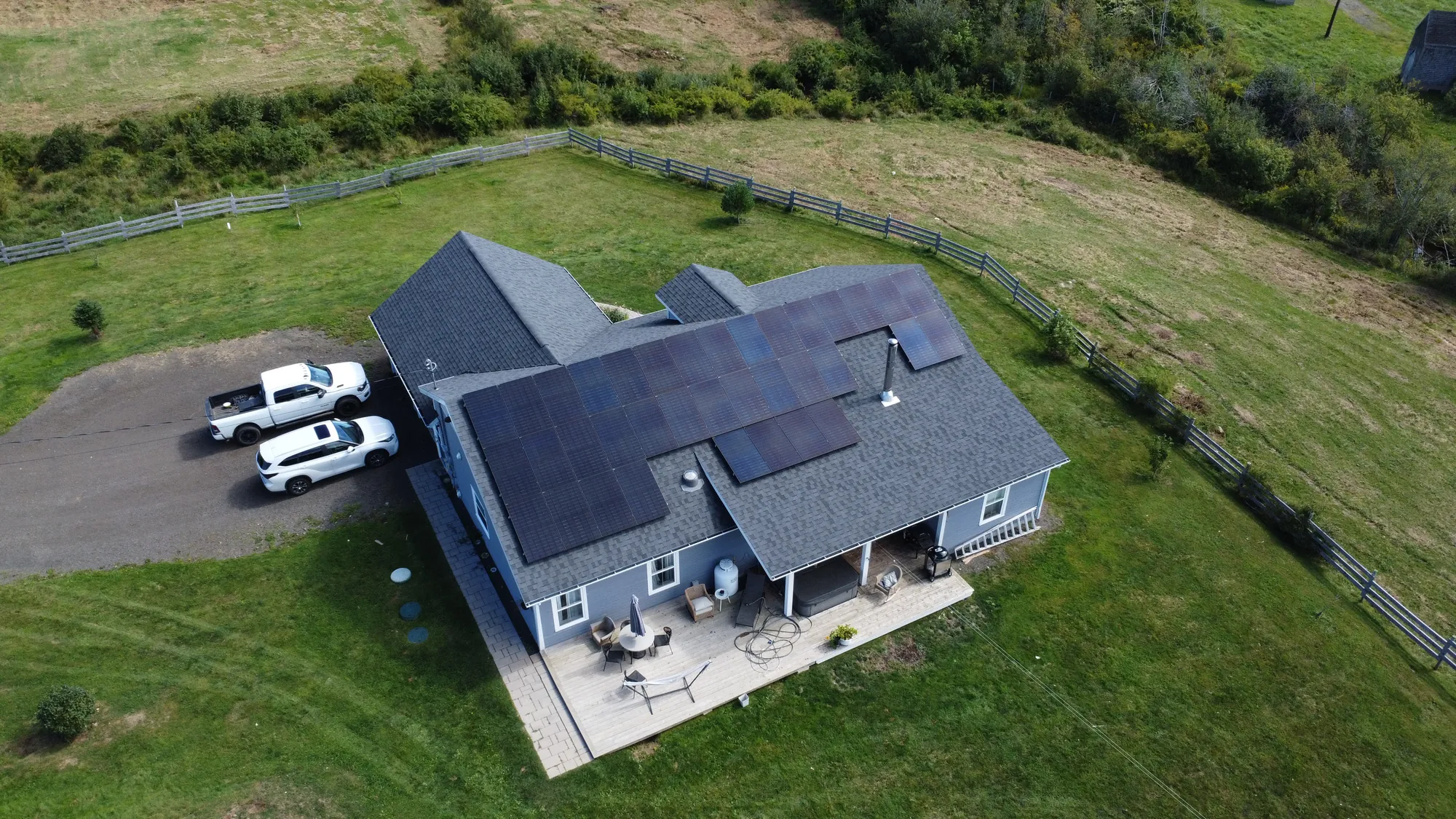
Case Study — No Panel Upgrade Needed
Full-Size Solar, Same Panel — Culloden, Nova Scotia
This home needed 36 solar panels to cover its power bills, but its electrical panel only had room for about 25. A safety feature from Enphase called busbar overload control let all 36 connect to the original panel, with no costly panel replacement.
Installed and switched on in September 2026.
System Size
18 kW
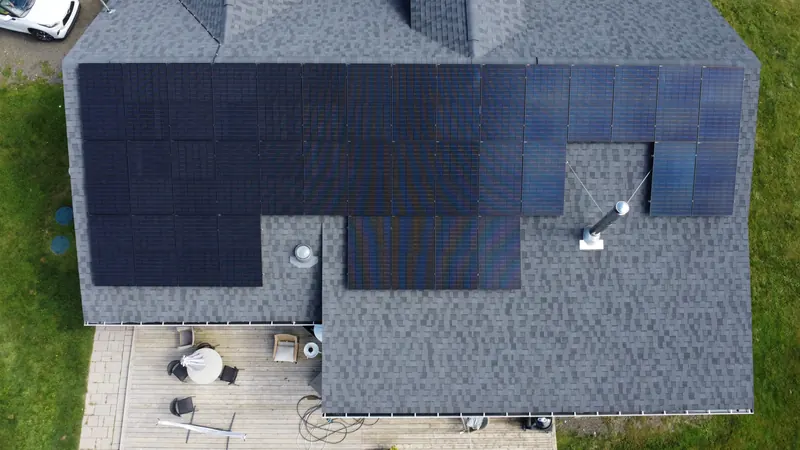
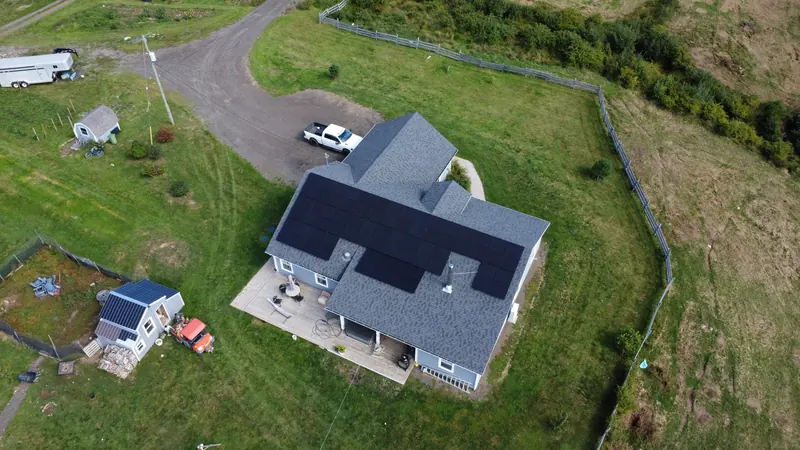
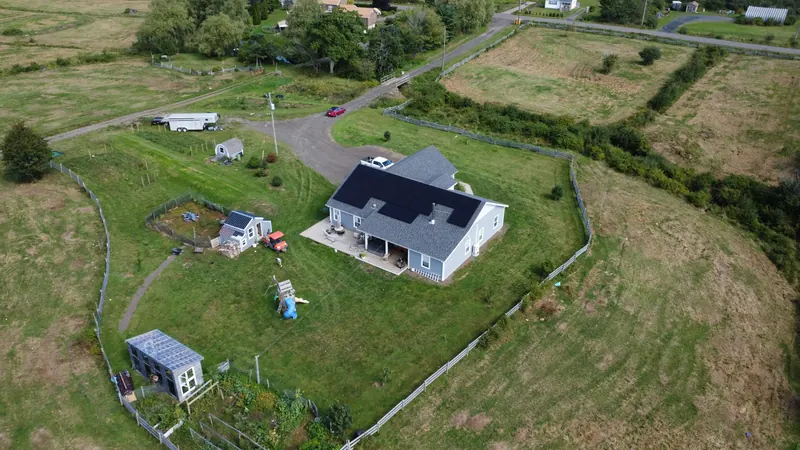
36 solar panels on the roof
Location
Culloden, NS
Digby County
Status
Up and running
Switched on September 2026
The electrical panel was too small for the system the house needed
Every home has an electrical panel, the grey box with all the breakers. Inside it is a metal strip called a busbar that carries the power to every circuit, and it can only safely handle so much.
Solar panels send their power into that same strip. So the safety rules put a cap on how much solar a given electrical panel can take. This home has a common 200 amp panel, and the cap worked out to about 25 solar panels.
The household's power bills called for 36.
Normally that leaves two options: pay to replace the electrical panel with a bigger one, or install a smaller system and keep paying for the power it doesn't cover. Neither was a good outcome for this homeowner.
Solar panels, by the numbers
| Solar panels this electrical panel could normally take | About 25 |
| Solar panels the household needed | 36 |
| Solar panels installed with PCS | 36 |

A built-in safety net: busbar overload control
Enphase systems include a feature called busbar overload control, part of what Enphase calls PCS (Power Control System). A small monitor watches how much power is flowing through the electrical panel at all times.
If the solar panels and the grid together would ever push the panel past its safe limit, it turns the solar output down a little until things are back in the safe range. Because the panel is always protected, the full 36-panel system is allowed to connect to it. Nova Scotia Power reviewed the design and approved it.
In everyday use it almost never has to step in. The rest of the time, all 36 panels run at full output.
What it avoided
Replacing the electrical panel, the power shutoff and extra work that comes with it, and a system about two-thirds the size the household needed.
System Specifications
| System size | 18 kW |
| Solar panels | 36 × LONGi 500 W |
| Microinverters | 36 × Enphase IQ8HC (one per panel) |
| Electrical panel | Original 200 amp panel, kept |
| Panel protection | Enphase busbar overload control (PCS) |
| Monitoring | Enphase app, panel-by-panel |
| Installed | September 2026 |
| Connected to the grid | September 2026 |
From first visit to switch-on
Sizing the system
We sized the system to the household's actual power bills. That called for 36 panels on the south-facing roof.
Checking the electrical panel
During the site visit we found the home's 200 amp panel could normally take only about 25 solar panels.
Designing around it
Instead of replacing the electrical panel, we designed the system with Enphase busbar overload control and got it approved by Nova Scotia Power.
Install and switch-on
We installed all 36 panels in September 2026. Nova Scotia Power approved the system to send power to the grid a few days later.
Performance Estimates
Estimated for this home and the way its roof faces the sun.
Yearly production
~22,000 kWh
Estimated power made each year
Monthly average
~1,860 kWh
More in summer, less in winter
Production per kW
~1,240 kWh
Per kW of panels, per year
Peak output
~13.7 kW
Most power it can deliver at once
These are estimates. Actual output depends on the weather and will vary from year to year.
What the Homeowner Gets
Full-size system, same electrical panel
All 36 solar panels connect to the home's original electrical panel. No panel replacement and no extra electrical work.
Sized to the bill, not the panel
The system was sized to cover the household's electricity use. Extra summer power is banked as credits with Nova Scotia Power.
25-year warranties
The Enphase microinverters have a 25-year warranty. The LONGi solar panels have a 25-year product warranty and a 30-year performance warranty.
Panel-by-panel monitoring
The Enphase app shows what every solar panel is producing and flags any problem.